

Welcome to the world of personal branding. This is where entrepreneurs and professionals alike are now realizing the power of crafting their own unique brands.
In today’s competitive landscape, personal branding has become a crucial element for success. Gone are the days when simply having a great idea or impressive credentials would be enough to stand out. In the digital age, information is abundant and attention spans are short. So, personal branding has emerged as a key differentiator. It’s no longer just about what you do.
How you present yourself and the impression you leave on others is very important.
In this skyscraper blog, we will delve into the importance of personal branding for entrepreneurs and professionals. We will also uncover how it can open doors, create opportunities, and propel your career or business to new heights. So, fasten your seatbelts and get ready to embark on a journey to unlock the power of personal branding!
- Understanding personal branding
- How personal branding can impact your career or business success?
- Steps in creating a personal brand for entrepreneurs and professionals
- Case studies: Real-life examples of successful personal branding
- Pitfalls to avoid: Common mistakes in personal branding
- Measuring the impact of personal branding: Key metrics to track
- Conclusion: Embracing the power of personal branding for your success
Understanding personal branding
In this section, we will delve into the definition, components, and benefits of personal branding, and why it is essential for your success.
Let’s dive in!
What is personal branding?
Personal branding is the process of strategically managing and promoting one’s own unique identity, expertise, and image. It involves intentionally shaping how one is perceived by others, both online and offline, through their actions, communications, and personal attributes.
Personal branding is about establishing a distinct and memorable presence in the minds of one’s target audience. It also differentiates oneself from others, and building a positive reputation that aligns with one’s goals and aspirations.
Components personal branding
Explore the key elements that make up a successful personal brand. Right from defining your unique value proposition to showcasing your authentic personality and style.
Unique Value Proposition (UVP): This is the unique value or benefit that an entrepreneur or professional offers to their audience or customers. It encompasses their skills, expertise, strengths, and what sets them apart from others in their field.
Brand Attributes: These are the personal qualities, characteristics, and values that define an individual’s brand identity. It includes elements such as their personality, core values, passions, and style, which contribute to their overall brand image.
Authenticity and Consistency: Authenticity is a crucial aspect of personal branding as it involves being genuine, transparent, and true to oneself. Consistency, on the other hand, ensures that one’s the brand message, tone, and visual elements are aligned across different platforms and interactions.
Storytelling: Storytelling is a powerful tool in personal branding as it allows entrepreneurs and professionals to convey their personal and professional journey, experiences, and achievements in a compelling and relatable way. It helps create a connection with the audience and establishes an emotional bond.
Benefits of personal branding
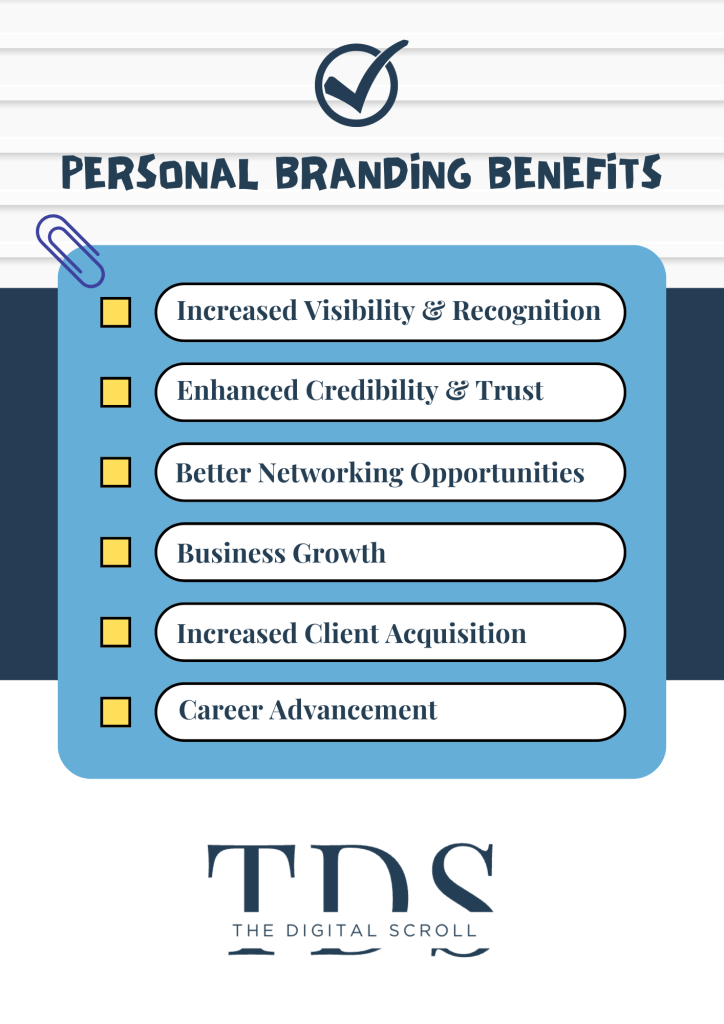
Uncover the numerous advantages of personal branding, including increased visibility, enhanced credibility, improved networking opportunities, business growth, and career advancement. Learn how it can positively impact your personal and professional life.
Let’s look at why personal branding is important for entrepreneurs
Increased Visibility and Recognition: A strong personal brand can help individuals stand out in a crowded marketplace and gain visibility and recognition among their target audience, leading to enhanced opportunities for career advancement or business growth.
Enhanced Credibility and Trust: A well-crafted personal brand can build credibility and trust with peers, clients, or customers. It establishes the individual as an authority in their field and fosters confidence in their expertise and abilities.
Improved Networking Opportunities: Personal branding can open doors to new networking opportunities, such as speaking engagements, collaborations, or partnerships, which can further expand an individual’s professional network and create valuable connections.
Business Growth and Client Acquisition: For entrepreneurs, a strong personal brand can contribute to business growth by attracting and retaining clients or customers. A well-known and respected personal brand can lead to increased referrals and repeat business.
Career Advancement: Personal branding can also contribute to career advancement by helping professionals establish themselves as thought leaders or experts in their field, leading to promotions, better job opportunities, and increased professional recognition.
How can personal branding impact your career or business success?
Personal branding can have a significant impact on your career or business success in several ways:
- Increased Visibility: A strong personal brand helps you stand out in a crowded market or industry, making you more visible to potential clients, customers, employers, or partners. It can elevate your profile and create more opportunities for you to showcase your expertise and skills.
- Enhanced Credibility: A well-crafted personal brand establishes you as an authority or expert in your field, building trust and credibility with your target audience. It positions you as a reliable and knowledgeable professional, which can lead to more business or career opportunities.
- Networking Opportunities: Personal branding can open doors to new networking opportunities, such as speaking engagements, collaborations, or partnerships. It allows you to connect with like-minded individuals, industry influencers, or potential clients/customers, leading to valuable connections and partnerships.
- Business Growth: For entrepreneurs, a strong personal brand can contribute to business growth by attracting and retaining clients or customers. A reputable personal brand can create a positive impression, increase customer loyalty, and generate more referrals and repeat business.
- Career Advancement: Personal branding can play a crucial role in advancing your career by establishing you as a thought leader or expert in your field. It can lead to promotions, better job opportunities, and increased recognition within your industry.
- Authenticity and Differentiation: Personal branding allows you to showcase your authentic self and unique qualities, setting you apart from the competition. It helps you create a distinct brand identity that resonates with your target audience, leading to increased trust and loyalty.
In summary, it is a powerful tool. It can help you achieve your personal and professional goals and stand out in a competitive landscape.
Liking what you read?
Subscribe to upcoming content NOW!
P.S. If you don’t have your own WordPress account, you will receive an email to verify your email ID to confirm your subscription
Steps in creating a personal brand for entrepreneurs and professionals
Creating a personal brand requires intentional effort and strategic planning. In this section, we will explore the essential steps to build a strong personal brand that reflects many things. This includes your unique value proposition, communicates your authentic story, establishes a compelling online presence, leverages social media effectively, builds a professional network, manages your reputation, and evolves with changing circumstances and goals.
Building your personal brand: Identifying your unique value proposition is a critical element in building a successful brand identity.
Your unique value proposition (UVP) is the combination of your skills, expertise, strengths, and unique qualities that set you apart from others in your field. It’s the essence of what makes you different, valuable, and memorable to others. Identifying your UVP is a crucial step in building your personal brand as it forms the foundation of your brand positioning and differentiates you from the competition.
To identify your unique value proposition, start by reflecting on your strengths, skills, and expertise. Consider what makes you stand out, what you excel at, and what sets you apart from others in your field. Ask yourself:
- What are your core strengths and skills that are valuable to your target audience?
- What unique qualities or experiences do you bring to the table?
- What problems can you solve or challenges can you overcome better than others?
- What makes you passionate about your work and sets you apart from others in your field?
Crafting your brand story: Communicating your story authentically
Crafting a compelling and authentic brand story is crucial. Especially when building a personal brand that resonates with your target audience and creates emotional connections. It should be relatable, engaging, and memorable, leaving a lasting impression on your audience.
Consider…
Know your audience: Understand who your target audience is, what they value, and what resonates with them. Tailor your brand story to align with their needs, preferences, and values. This will help you create a connection with them on a deeper level.
Be authentic and genuine: Authenticity is key in crafting your brand story. Avoid exaggerating or embellishing your achievements, as it can erode trust and authenticity. Share your challenges, failures, and successes in a genuine and relatable way.
Share your passion and values: Your passion and values are important elements of your brand story. Share what motivates and inspires you, and what you believe in. This will create an emotional connection with your audience and help them understand what drives you.
Use engaging language: Your brand story should be told in a way that is engaging and resonates with your audience. Use descriptive and emotive language to convey your story effectively. Avoid jargon or technical terms that may be difficult for your audience to understand.
Be consistent: Communicate your brand story consistently across all your personal brand touchpoints, such as your website, social media profiles, and networking events. This will help reinforce your personal brand and create a cohesive and memorable impression.
Establishing your online presence: Optimizing your digital footprint

Establishing your online presence is a fundamental step in building a strong personal brand in today’s digital age. Your online presence includes all the information and content associated with you that can be found online, and it plays a crucial role in shaping how others perceive you and your personal brand.
Here are some strategies to optimize your digital footprint and create a positive and consistent brand image:
Create a professional website or blog
Having a professional website or blog allows you to showcase your skills, expertise, and achievements in a centralized and controlled manner. It serves as a hub for your personal brand and allows you to have full control over your online presence.
You can customize your website or blog to reflect your personal brand visually, including your brand colors, logo, and fonts.
You can also create engaging and relevant content that aligns with your personal brand and provides value to your audience. This can include blog posts, articles, case studies, and testimonials.
Optimizing your website or blog for search engines (SEO) can also improve your online visibility and make it easier for others to find you online.
Optimize your social media profiles
Social media platforms are often the first place people look to learn more about you and your personal brand. It’s crucial to optimize your social media profiles to align with your personal brand.
This includes using professional profile pictures that convey the right image, crafting compelling and consistent bios that highlight your expertise and values, and sharing relevant and engaging content that reflects your personal brand voice. Make sure to use consistent branding elements, such as your brand colors, fonts, and logo, across all your social media profiles to create a cohesive and recognizable brand image.
Manage your online reputation
Your online reputation is a critical aspect of your personal brand. It’s essential to proactively manage your online reputation to ensure that it aligns with your personal brand values and reflects a positive image. Regularly monitor your online presence by searching for your name on search engines and social media platforms to see what information and content come up.
Address any negative reviews or feedback professionally and promptly, and take steps to mitigate any potential damage to your brand reputation. This can include responding to customer inquiries, addressing complaints, and resolving issues in a professional and timely manner.
Leveraging social media for personal branding: Best practices and strategies
Leveraging social media for personal branding involves defining your goals, choosing the right platforms, creating compelling content, engaging with your audience, building and managing an online community, being authentic and transparent, and monitoring and managing your online reputation.
By defining your goals and choosing the right platforms, you can focus your efforts where your target audience is most active.
Creating compelling content aligned with your personal brand and engaging with your audience through comments, messages, and discussions helps build trust and credibility. Building and managing an online community related to your expertise can establish you as a thought leader. Authenticity and transparency are crucial for personal branding, and being genuine, honest, and approachable helps foster authentic connections.
Lastly, monitoring and managing your online reputation by responding professionally to feedback and addressing negative comments helps maintain a positive brand image. By following these best practices, you can effectively leverage social media for personal branding, establish a strong online presence, and build a credible and influential personal brand.
Building a professional network: Expanding your reach and influence

Building a professional network is a critical aspect of personal branding as it allows you to expand your reach and influence in your industry or field. Networking can create valuable opportunities for business growth, career advancement, and industry connections. To build a professional network, you can participate in networking events, join industry associations or groups, attend conferences or seminars, and engage in online networking platforms.
By actively networking, you can connect with like-minded professionals, learn from their experiences, and gain insights into industry trends and opportunities.
Expanding your reach and influence through networking involves building and nurturing genuine relationships with other professionals. This can be achieved by being approachable, listening actively, asking thoughtful questions, and showing genuine interest in others. Additionally, providing value to your network by sharing your expertise, offering assistance, and being a resource can help establish you as a trusted and respected professional.
Networking also involves maintaining regular communication and follow-ups with your connections to strengthen relationships and stay top of mind. By nurturing your professional network, you can expand your reach, increase your influence, and create opportunities for collaborations, partnerships, referrals, and career advancement.
Building a professional network requires time, effort, and consistency, but the benefits can be significant.
A robust professional network can open doors to new opportunities, help you stay informed about industry trends, provide support and advice, and enhance your personal brand by associating with other respected professionals in your field. It’s an essential step in building a strong personal brand and expanding your reach and influence in your industry.
Managing your reputation: Handling feedback and criticism
Managing your reputation is a critical aspect of personal branding as it directly impacts how others perceive you and your brand. Handling feedback and criticism in a professional and effective manner is essential to maintain a positive reputation and build trust with your audience.
Receiving feedback and criticism, whether it’s from clients, customers, colleagues, or others, is inevitable. It’s important to approach feedback with an open mind and a willingness to learn and improve. Avoid getting defensive or taking feedback personally. Instead, listen carefully, acknowledge the feedback, and respond in a constructive and professional manner.
When addressing criticism, it’s important to maintain a calm and composed demeanor. Avoid responding impulsively or engaging in heated exchanges. Take the time to understand the underlying concerns or issues, and respond in a diplomatic and respectful manner. Always be professional, courteous, and solution-oriented in your interactions.
It’s also important to proactively manage your online reputation. Monitor your social media profiles, review sites, and search results regularly to identify and address any negative comments, reviews, or misinformation. Respond promptly and professionally to any negative feedback, and take steps to mitigate any potential damage to your brand reputation.
Remember that handling feedback and criticism is not about avoiding or dismissing it, but about managing it effectively. By responding professionally and constructively to feedback and criticism, you can demonstrate your professionalism, integrity, and commitment to continuous improvement, which can enhance your reputation and strengthen your personal brand.
Evolving your personal brand: Adapting to changing circumstances and goals
Your personal brand is not static; it should evolve and adapt to changing circumstances and goals in order to remain relevant and effective. As you progress in your career or business, or as your personal goals shift, it’s crucial to reassess and adjust your personal brand accordingly.
Adapting your personal brand begins with a thorough evaluation of your current brand image, messaging, and positioning. Consider how well your personal brand aligns with your changing circumstances, goals, and target audience. Identify any gaps or areas that need improvement.
Once you have identified the areas for improvement, take strategic steps to evolve your personal brand. This may involve updating your branding materials, such as your website, social media profiles, or marketing materials, to reflect your current goals and direction. You may also need to revise your messaging to better resonate with your target audience and align with your evolving values and vision.
It’s essential to stay current with industry trends and market demands to ensure your personal brand remains relevant. Stay informed about changes in your industry, keep up with emerging technologies, and continually seek opportunities to enhance your skills and knowledge.
In addition, be open to feedback from trusted mentors, colleagues, or clients. Listen to their perspectives and insights, and use them as valuable inputs for refining and adapting your personal brand strategy.
Lastly, remember that evolving your personal brand is a continuous process. Regularly review and update your personal brand to ensure it remains aligned with your changing circumstances, goals, and audience. By actively managing and evolving your personal brand, you can stay competitive, relevant, and impactful in your chosen field or industry.
Liking what you read?
Subscribe to upcoming content NOW!
P.S. If you don’t have your own WordPress account, you will receive an email to verify your email ID to confirm your subscription
Case studies
Real-life examples of successful personal branding for entrepreneurs
Case studies are a powerful way to understand how personal branding can be successful in real-life scenarios. Here are a few examples of individuals who have built successful personal brands:
Elon Musk
The CEO of Tesla, SpaceX, and other companies, Elon Musk has built a personal brand as a visionary and innovator in the fields of electric vehicles, space exploration, and renewable energy. He is known for his bold ideas, forward-thinking mindset, and ambitious goals, which have helped him establish a strong personal brand as a thought leader and disruptor in multiple industries.
Oprah Winfrey
Oprah Winfrey has built a personal brand as a media mogul, philanthropist, and inspirational figure. Through her successful TV show, magazine, book club, and other ventures, she has created a personal brand focused on empowerment, self-improvement, and making a positive impact on people’s lives. Her authentic and relatable approach has earned her a loyal following and established her as a trusted and influential figure.
Gary Vaynerchuk
Known as “GaryVee,” Gary Vaynerchuk is a serial entrepreneur, author, and social media personality who has built a personal brand focused on entrepreneurship, marketing, and personal development. Through his online presence, books, podcasts, and speaking engagements, he has established himself as an expert in digital marketing and business strategy, using his authentic and direct communication style to connect with his audience.
Brené Brown
Brené Brown is a renowned researcher, author, and speaker who has built a personal brand focused on vulnerability, courage, and empathy. Her TED talks, books, and public appearances have helped her establish a personal brand as a thought leader in the field of vulnerability and shame research, resonating with millions of people worldwide.
Richard Branson
Richard Branson is a business magnate, investor, and philanthropist who has built a personal brand as a maverick entrepreneur and adventurer. Through his Virgin brand and various business ventures, he has cultivated a personal brand that embodies innovation, risk-taking, and social responsibility, positioning himself as a charismatic and influential figure in the business world.
How CA professionals in India can create a personal brand to grow their practice
In India, as per the regulations of the Institute of Chartered Accountants of India (ICAI), chartered accountants (CAs) are not allowed to advertise their services directly. However, personal branding can still play a significant role in the success of CAs and professionals in similar fields.
Through personal branding, CAs can establish themselves as experts in their field, build trust with potential clients, and differentiate themselves from their competition. By showcasing their expertise, experience, and unique value proposition through content creation, speaking engagements, networking events, and online presence, CAs can position themselves as trusted advisors and thought leaders in the financial and accounting industry.
Personal branding can also help CAs build a professional network and expand their reach and influence. By actively engaging in industry associations, networking events, and online communities, CAs can connect with fellow professionals, potential clients, and referral sources, which can lead to valuable business opportunities, career growth, and collaborations.
Moreover, personal branding can help CAs adapt to changing circumstances and goals. As the accounting and finance industry evolves, CAs need to stay relevant and maintain a competitive edge. By continuously evaluating and adapting their personal brand to align with their changing career objectives, target audience, and industry trends, CAs can position themselves as dynamic and forward-thinking professionals.
In summary, although CAs in India are not allowed to advertise their services directly, personal branding can still play a crucial role in their success. By building a strong personal brand, CAs can establish their expertise, build trust, expand their network, and adapt to changing circumstances, helping them excel in their careers and make a positive impact in their industry.
Pitfalls to avoid:
Common mistakes entrepreneurs make when it comes to personal branding

Personal branding, like any other endeavor, comes with its own set of challenges. Avoiding common mistakes can help you build a strong and effective personal brand.
Here are some pitfalls to avoid:
Lack of Authenticity
Authenticity is a key element of personal branding. Failing to be genuine and transparent in your personal brand can lead to inconsistency, lack of trust, and eventual failure. Avoid exaggerating or misrepresenting yourself, as it can damage your reputation and hinder your long-term success.
Inconsistency
Inconsistent branding can confuse your audience and dilute your brand image. Inconsistency in messaging, visual elements, and overall brand positioning can weaken your personal brand. Ensure that your brand elements, including your website, social media profiles, and content, are aligned and consistent.
Neglecting Your Target Audience
Personal branding is about connecting with your target audience. Neglecting to understand and cater to the needs, preferences, and expectations of your audience can result in a weak and ineffective personal brand. Always keep your target audience in mind when creating your brand strategy, content, and engagement efforts.
Neglecting Your Online Presence
In today’s digital age, your online presence is crucial to your personal brand. Neglecting to optimize your online presence, including your website, social media profiles, and search results, can hinder your brand’s visibility and impact. Be proactive in managing your online reputation and ensuring that your digital footprint supports your personal brand.
Overlooking Consistent Brand Messaging
Brand messaging is the foundation of your personal brand. Failing to develop and consistently communicate your brand messaging can result in a weak and unclear brand image. Be clear about your unique value proposition, core messages, and brand positioning, and ensure that they are consistently reflected in your brand communications.
Ignoring Feedback and Criticism
Feedback and criticism can be valuable opportunities for growth and improvement. Ignoring or reacting defensively to feedback can hinder your personal brand’s progress. Embrace feedback as a chance to learn, adapt, and refine your brand strategy to better align with your audience and goals.
Failing to Evolve
Personal branding is not static. Failing to evolve your personal brand with changing circumstances, goals, and industry trends can lead to stagnation and loss of relevance. Stay proactive in evaluating and adapting your personal brand to stay current, relevant, and competitive.
Measuring the impact of personal branding for entrepreneurs
Key metrics to track

Measuring the impact of your personal branding efforts is essential to determine the effectiveness of your strategies and make data-driven decisions. Here are some key metrics to track:
Brand Awareness
Measure your brand awareness by tracking metrics such as website traffic, social media followers, engagement rates, and search engine rankings. Higher brand awareness indicates that your personal brand is gaining visibility and reaching a larger audience.
Audience Engagement
Monitor metrics such as likes, comments, shares, and retweets on your social media posts, blog comments, and email open rates. These metrics reflect how engaged your audience is with your personal brand and content, indicating the level of interest and interaction.
Content Performance
Track metrics such as website traffic, time on site, bounce rate, and content downloads to assess the performance of your content. These metrics help you identify the type of content that resonates with your audience and drives engagement.
Reputation Management
Monitor online reviews, testimonials, and feedback to gauge your online reputation. Positive reviews and feedback indicate a favorable perception of your personal brand, while negative feedback provides opportunities for improvement.
Thought Leadership
Measure your thought leadership impact by tracking metrics such as speaking engagements, guest appearances on podcasts or webinars, media mentions, and industry awards. These metrics demonstrate your expertise and influence in your field.
Lead Generation: Track metrics such as website conversions, email subscriptions, and inquiries to assess the effectiveness of your personal branding efforts in generating leads and opportunities for your business or career.
Social Media Reach
Monitor the reach and engagement of your social media posts to assess the effectiveness of your social media strategy. Track metrics such as impressions, reach, and engagement rates to measure the impact of your social media content.
Career Advancement
If you are building a personal brand for career advancement, track metrics such as job offers, promotions, salary increases, and industry recognition to measure the impact of your personal branding efforts on your career growth.
Regularly tracking these key metrics and analyzing the data will help you measure the impact of your personal branding efforts, identify areas for improvement, and optimize your strategies to achieve your personal brand goals.
Conclusion: Embracing the power of personal branding for your success
Personal branding is crucial for success in today’s digital landscape. Steps like establishing an online presence, leveraging social media, building a professional network, and managing reputation are key. Avoiding pitfalls and measuring impact through metrics is important.
Embrace personal branding as a tool to differentiate yourself, enhance your reputation, and achieve your goals. With consistent effort and strategic planning, your personal brand can be a powerful asset for success.

 The Digital Scroll
Leave a reply to Easily Boost Your Online Presence: 7 Tips and Strategies – The Digital Scroll Cancel reply