

Optimizing your marketing funnel is critical for converting potential customers into actual customers. The marketing funnel is a framework that guides prospects through the buyer’s journey, from initial awareness to taking action, and it’s essential to understand how to make the most of each stage.
In this blog post, we’ll take a deep dive into the marketing funnel, starting from the top of the funnel, where prospects first become aware of your brand, to the bottom of the funnel, where they take action, such as making a purchase or signing up for a service.
We’ll explore the different stages of the funnel and provide actionable tips on how to optimize each stage to maximize conversions and drive revenue. By the end of this post, you’ll have a clear understanding of how to move prospects from awareness to action and take your marketing efforts to the next level.
The AIDA model is a popular marketing framework that outlines the four stages a customer goes through before making a purchase: Attention, Interest, Desire, and Action.
- What is the Marketing Funnel
- Attention – Marketing Funnel
- Interest – Middle of the Marketing Funnel
- Desire – Middle of the Marketing Funnel
- Action – Bottom of the Marketing Funnel
What is the Marketing Funnel
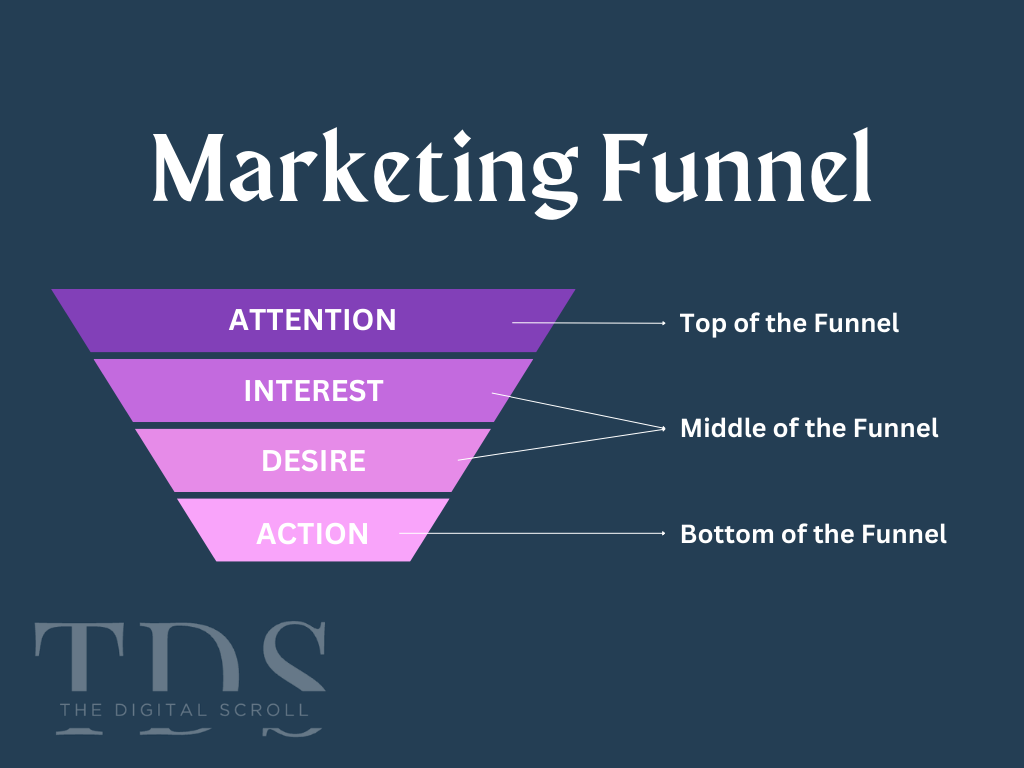
The marketing funnel, also known as the sales funnel, is a conceptual model that maps out the customer journey from initial awareness of a product or service to the final purchase. It’s called a funnel because it’s shaped like a funnel, with a wide opening at the top to capture potential customers and a narrow opening at the bottom representing the final purchase.
The marketing funnel is divided into several stages, including awareness, interest, consideration, and conversion.
The goal of the marketing funnel is to guide potential customers through each stage, with the ultimate aim of turning them into loyal customers.
Attention – Top of the Marketing Funnel
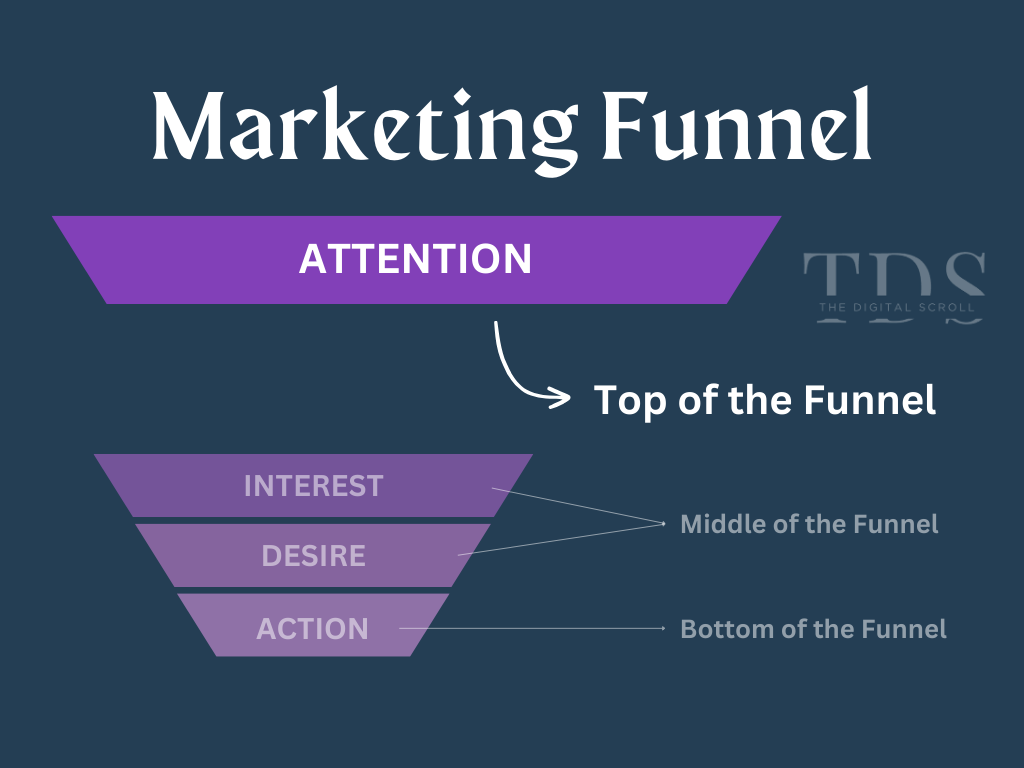
The Attention stage is the first stage of the AIDA model, which stands for Attention, Interest, Desire, and Action. In this stage, businesses aim to capture the attention of potential customers and create awareness about their products or services.
The importance of the Attention stage cannot be overstated, as it’s the first step in the AIDA model and the starting point of a customer’s journey towards making a purchase.
Here are a few ways how attention at the top of AIDA affects businesses:
A successful Attention stage can lead to increased brand awareness, improved customer engagement, and ultimately more conversions and revenue for the business.
Increased Brand Awareness:
The Attention stage is crucial for creating brand awareness among potential customers. A well-designed marketing campaign that captures attention through compelling headlines, visually appealing content, or influencer marketing can help businesses reach a wider audience and introduce them to their products or services.
Improved Customer Engagement:
By creating engaging content that resonates with potential customers, businesses can improve customer engagement and foster a relationship of trust with them. This can lead to increased customer loyalty and retention, as customers are more likely to remain engaged with a business that offers value and relevance.
More Conversions and Revenue:
A successful Attention stage can ultimately lead to more conversions and revenue for the business. By attracting potential customers and creating awareness about their products or services, businesses can move potential customers further down the AIDA model towards making a purchase.
In conclusion, the Attention stage is a critical component of the AIDA model, and it’s essential for businesses to capture the attention of potential customers through compelling marketing campaigns. By doing so, businesses can increase brand awareness, improve customer engagement, and ultimately drive more conversions and revenue.
Interest – Middle of the Marketing Funnel
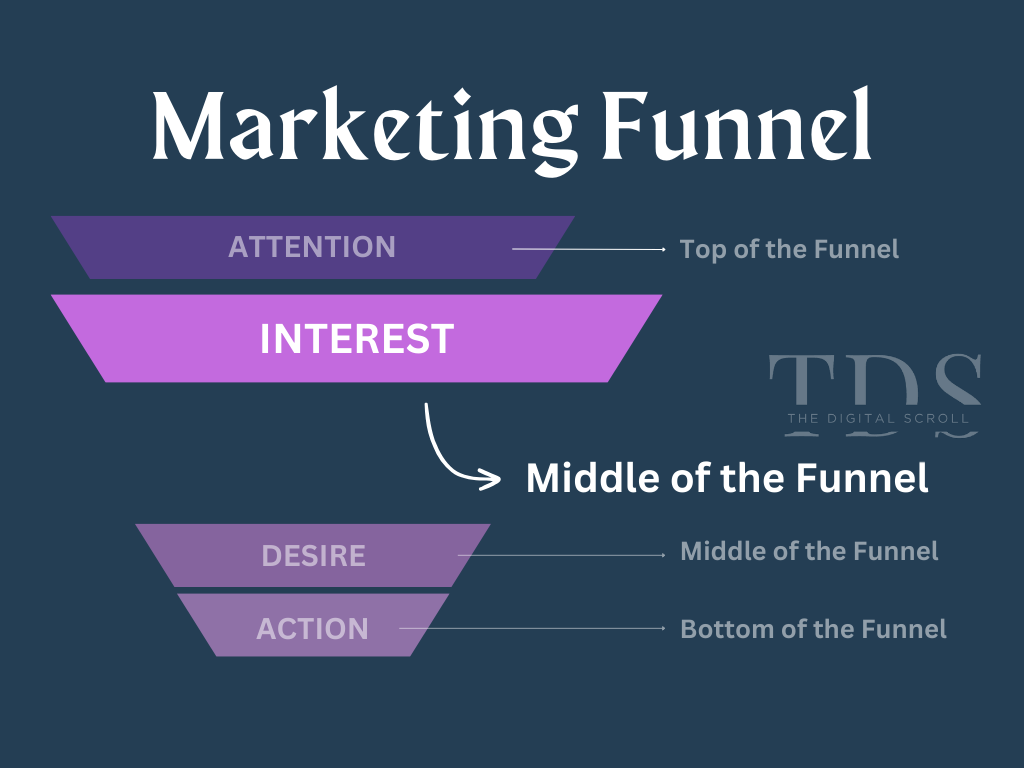
The Interest stage is the middle of the marketing funnel and follows the Awareness stage. In this stage, potential customers have already been introduced to the business and its products or services, and are now showing interest in learning more. The Interest stage is all about nurturing that interest and providing potential customers with more information to help them make an informed decision.
Some common tactics used in the Interest stage include:
- Lead magnets: Offering free resources such as ebooks, whitepapers, or webinars to potential customers in exchange for their contact information.
- Email marketing: Sending targeted and personalized email campaigns to potential customers to keep them engaged and informed.
- Retargeting ads: Displaying targeted ads to potential customers who have already shown interest in the business or its products.
- Social media: Creating engaging content on social media platforms to keep potential customers interested and informed.
The ultimate goal of the Interest stage is to move potential customers towards the Consideration stage, where they will start comparing different options and considering making a purchase. By providing valuable information and nurturing potential customers, businesses can increase the likelihood of converting them into paying customers.
Desire – Middle of the Marketing Funnel
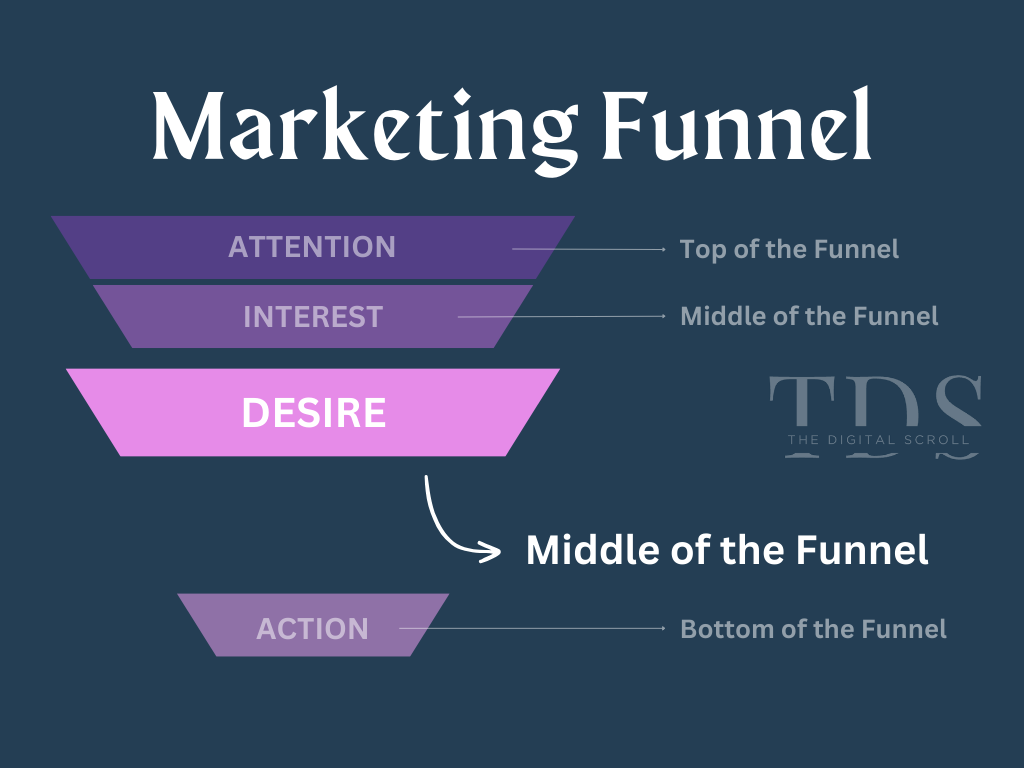
The Desire stage is the third stage in the marketing funnel, following the Interest stage. In this stage, potential customers have moved beyond simply being interested in the business and its products or services, and are now actively considering making a purchase. The Desire stage is all about creating a sense of desire and urgency in potential customers, and persuading them to choose the business over its competitors.
Some common tactics used in the Desire stage include:
Testimonials and reviews: Showcasing positive reviews and testimonials from satisfied customers to build social proof and credibility.
Limited-time offers and promotions: Creating a sense of urgency and encouraging potential customers to take action by offering limited-time discounts or promotions.
Product demonstrations and samples: Providing potential customers with hands-on experience or samples of the product to generate interest and desire.
Case studies and success stories: Highlighting how the business’s products or services have helped other customers achieve their goals, and how they can do the same for the potential customer.
The ultimate goal of the Desire stage is to move potential customers towards the final stage of the marketing funnel, Action, where they will make a purchase or take some other desired action. By creating a sense of desire and urgency, providing compelling reasons to choose the business over its competitors, businesses can increase the likelihood of converting potential customers into paying customers.
Action – Bottom of the Marketing Funnel
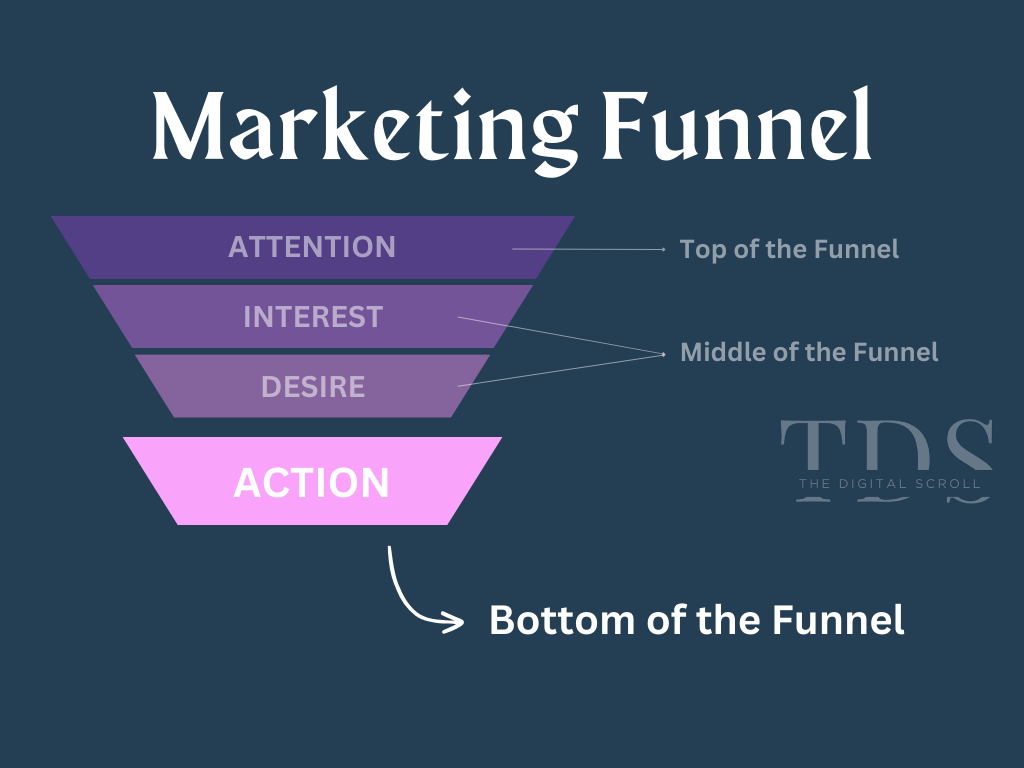
The Action stage is the final stage of the marketing funnel, where potential customers have made the decision to take action and make a purchase or complete some other desired action. The Action stage is all about closing the deal and making it as easy as possible for the customer to take the desired action.
Some common tactics used in the Action stage include:
Call to action (CTA):
A CTA is a clear and concise statement that prompts the user to take a specific action. It’s essential to include CTAs throughout the website, landing pages, and other marketing materials to encourage potential customers to take action. Some examples of CTAs include “Buy Now,” “Subscribe,” or “Learn More.”
The CTA should be placed prominently on the page and be easily visible to the user. It’s also essential to ensure that the CTA is clear and compelling, so the user understands exactly what action they’re taking and why it’s important.
Talking about adding a CTA reminded me to add my own CTA 😉
Liking what you read?
Subscribe to upcoming content NOW!
P.S. If you don’t have your own WordPress account, you will receive an email to verify your email ID to confirm your subscription
Simplified checkout process:
The checkout process can be a significant source of friction for potential customers, leading to abandoned shopping carts and lost sales. Streamlining the checkout process and minimizing any obstacles that could prevent potential customers from completing their purchase is critical.
Some ways to simplify the checkout process include allowing guest checkout, providing clear and concise instructions, and minimizing the number of steps required to complete the purchase.
Personalized messaging:
Providing personalized messaging that speaks directly to the customer’s needs and concerns is essential for building trust and driving conversions. This can include addressing any questions or objections the customer may have and providing tailored product recommendations based on their browsing or purchase history.
Personalized messaging can be achieved through segmentation and targeting, using customer data and behavior to create targeted campaigns and messaging.
Upselling and cross-selling:
Offering related products or services to the customer as part of the checkout process can increase the value of the sale and drive revenue for the business. This can include recommending complementary products or services, offering a bundle or package deal, or highlighting premium features or add-ons.
It’s important to ensure that the upsell or cross-sell is relevant to the customer’s needs and interests and provides clear benefits or value. However, it’s also important not to be too pushy or aggressive, as this can turn customers off and lead to a negative experience.
The ultimate goal of the Action stage is to convert potential customers into paying customers and drive revenue for the business. By making the process as easy and seamless as possible and addressing any concerns or objections the customer may have, businesses can increase the likelihood of successful conversions and repeat business in the future.
Conclusion
In conclusion, optimizing your marketing funnel is a crucial step in driving conversions and achieving your business goals. From building awareness to driving action, each stage of the funnel requires a strategic approach to ensure that you’re reaching the right audience with the right message at the right time.
By using the AIDA model, you can create a clear and effective strategy for each stage of the funnel, including attention, interest, desire, and action. It’s also essential to use a range of tactics and techniques to optimize each stage, such as personalized messaging, clear CTAs, simplified checkout processes, and upselling and cross-selling.
Ultimately, optimizing your marketing funnel requires a deep understanding of your target audience and their needs and interests. By focusing on providing value and building trust at each stage of the funnel, you can create a seamless and effective customer journey that drives conversions and helps you achieve your business goals.


Leave a Reply