

Keyword research is the cornerstone of successful Search Engine Optimization (SEO). In the vast landscape of the internet, keywords act as guiding stars, helping search engines connect users with the content they seek.
In this blog post, we’ll delve deep into the world of keyword research, unveiling its importance, methods, and strategies.
What is Keyword Research
In the vast digital realm, understanding the keyword landscape is akin to deciphering the map of a complex territory. This blog can serve as a compass, guiding you through the fundamentals of keywords and their pivotal role in the online ecosystem.
Exploring the Fundamentals of Keywords:
Keywords are the language of the internet. They are the words and phrases that users type into search engines to find information, products, or solutions to their queries.
At its core, a keyword represents a concept or topic. Understanding this fundamental aspect is crucial because it lays the foundation for effective SEO.
Keywords come in various forms, ranging from single words (short-tail keywords) to more specific phrases (long-tail keywords). Each keyword has a unique search volume, competition level, and user intent associated with it.
Difference Between Short Tail and Long Tail Keywords:
To navigate the keyword landscape effectively, it’s essential to differentiate between short-tail and long-tail keywords.
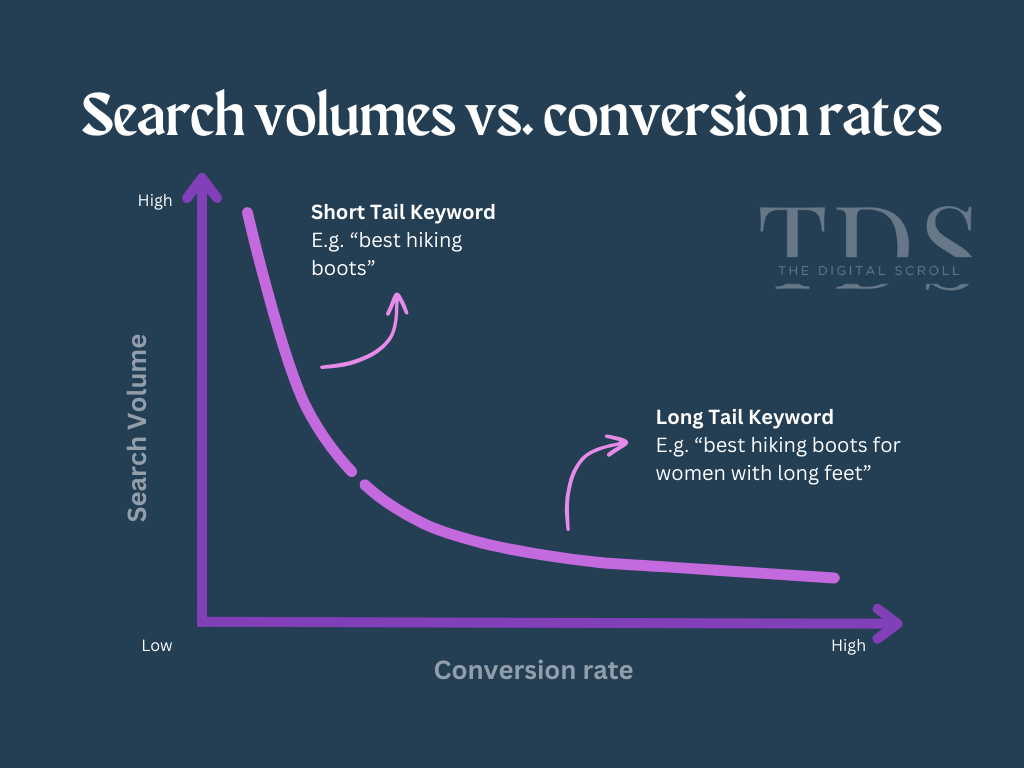
Short Tail Keywords:
These are brief, often one or two-word phrases that are broad in scope. For instance, “shoes” or “travel.” They typically have high search volumes but are highly competitive, making it challenging to rank for them.
Long Tail Keywords:
In contrast, long-tail keywords are longer and more specific phrases. They provide greater context and detail. Examples include “best hiking boots for women with wide feet” or “how to bake a gluten-free chocolate cake.” Long-tail keywords have lower search volumes individually but collectively account for a substantial portion of internet searches.
The Keyword Research Process
Conducting effective keyword research involves a structured process. Begin with brainstorming relevant topics, then identify a set of broad “seed” keywords.
Utilize trusted tools like Google Keyword Planner, SEMrush, and Ahrefs to expand your keyword list and gather essential data on search volume and competition.
Analyze and prioritize the keywords based on relevance and competitiveness, with a focus on long-tail keywords that strike a balance between search volume and attainability. This methodical approach ensures that your keyword strategy aligns with user intent, optimizing your website’s visibility and attracting the right audience.
Analyzing Keyword Data
Interpret search volume, competition, and keyword difficulty. Search volume indicates how often users search for a specific keyword, while competition measures the number of websites targeting the same keyword. Keyword difficulty assesses how hard it is to rank for that keyword.
Balance these factors to identify keywords that offer the best opportunity for ranking and attracting traffic.
Identify high-value keywords for your niche by selecting keywords that align with your content or business goals and resonate with your target audience. These keywords should have sufficient search volume, moderate competition, and clear user intent.
Incorporate user intent into keyword selection to ensure that your content answers users’ questions or fulfils their needs. Understand why people are searching for a particular keyword to create content that meets their expectations and provides value.
Competitive Analysis
Studying competitors is vital as it unveils their strategies. Identifying their target keywords and content strategies provides a blueprint for success. It helps you understand market dynamics, discover valuable keywords, and create compelling content that resonates with your audience.
Leverage these insights to stay ahead, refine your approach, and capture a larger share of your niche’s online presence.
Content Strategy and Keyword Integration
- Integrating keywords naturally into your content.
- Optimize meta tags, headings, and body content.
- Balance keyword density for readability and SEO.
Check out my blog on content strategies to understand this better!
Tracking and Iteration
Tracking and iteration are the engines that drive SEO success. In this pivotal chapter, we delve into the art of monitoring and adapting your SEO strategies. Regularly tracking keyword rankings, organic traffic, and user engagement provides crucial feedback on the effectiveness of your efforts.
SEO tools like Google Analytics and SEMrush aid in this endeavor, offering valuable insights into what’s working and what needs adjustment.
Iteration is where your SEO strategy evolves. Armed with data, you can refine your keyword selection, content optimization, and backlink strategies. Staying agile and responsive to algorithm changes ensures that your website not only maintains but continually improves its search engine visibility, keeping you ahead in the ever-evolving digital landscape.
Long-Term Keyword Strategy
A long-term keyword strategy is the North Star that guides your SEO journey beyond the initial stages.
Your long-term keyword strategy should reflect industry trends, user behavior changes, and shifts in search engine algorithms. It involves continuously monitoring keyword performance, identifying emerging trends, and staying updated with the latest developments in your niche.
Additionally, consider incorporating user-generated content into your strategy. Encourage reviews, comments, and contributions from your audience, as this not only diversifies your keyword portfolio but also fosters a sense of community and trust.
Conclusion: Keyword Research for SEO Success
In the ever-evolving world of SEO, keyword research remains a linchpin for website visibility and success. By understanding the keyword landscape, conducting thorough research, and applying the right strategies, you can unlock the true potential of your website and connect with your target audience.
Start your journey towards SEO mastery today, armed with the knowledge and tools to make your online presence shine.
Liking what you read?
Subscribe to upcoming content NOW!
P.S. If you don’t have your own WordPress account, you will receive an email to verify your email ID to confirm your subscription


Leave a Reply